The Process Behind Every Handmade Cup
When people see a finished cup or mug, it might seem like a simple object—but the process behind making it is anything but simple. Each piece requires patience, time, and careful attention to detail. In fact, it can take up to three weeks to complete just one cup from start to finish.
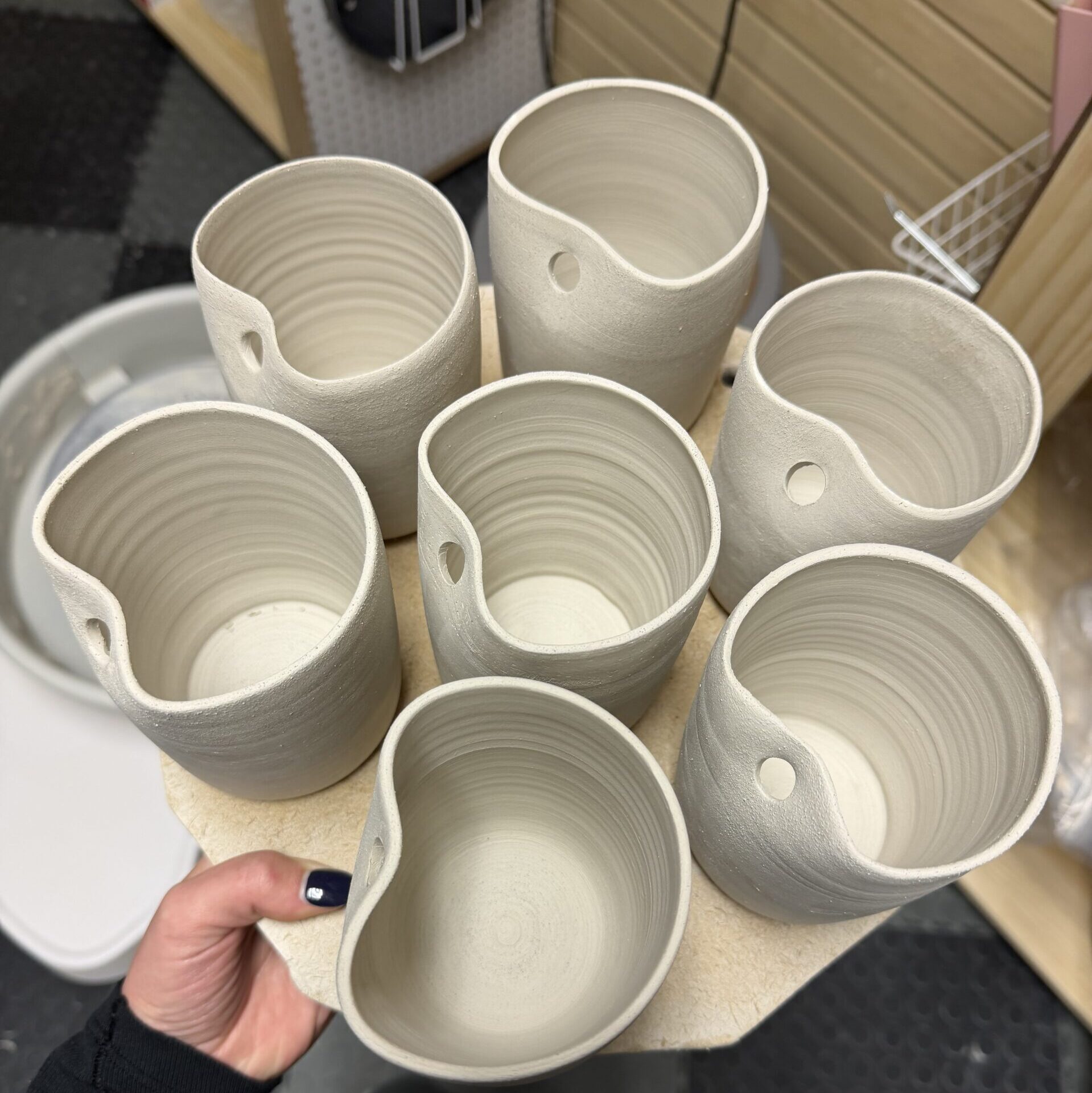
The process begins with shaping the clay. This is where the cup first starts to take form, but it’s also one of the most delicate stages. Getting the shape just right takes practice, and sometimes the walls of the cup end up too thin. When that happens, the cup can become fragile and may crack or break later in the process. Other times, the shape simply doesn’t turn out the way I envisioned, which means starting over and trying again.
And then there are the moments every ceramic artist knows well—the unexpected accidents. Sometimes a cup gets dropped before it’s finished, undoing hours of work in a single second. It’s frustrating and a little heartbreaking, but mistakes are truly part of the journey. Each broken piece teaches me something new about working with clay and helps me improve with every attempt.
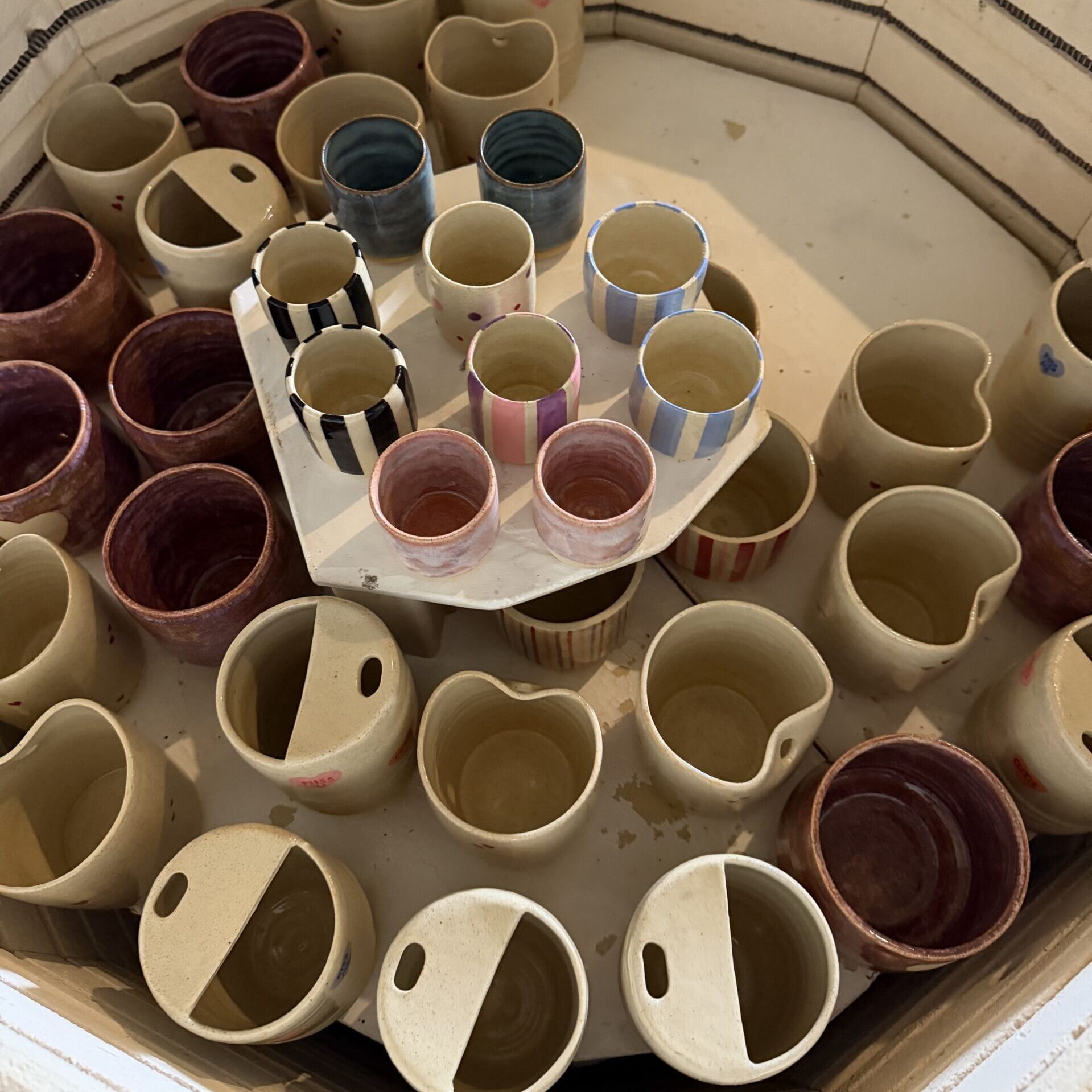
After shaping the cup, it needs time to dry slowly before it can go into the kiln for its first firing. Once it’s been fired, the next step is glazing, which is where the piece really comes to life with color and design. After glazing, the cup goes back into the kiln for a second firing to finish the piece and make it durable for everyday use.
There are so many steps involved in creating a single cup, and none of them can be rushed. From shaping the clay to the final firing, each stage requires patience and care. But when a finished cup finally comes out of the kiln, it makes all the effort worthwhile.
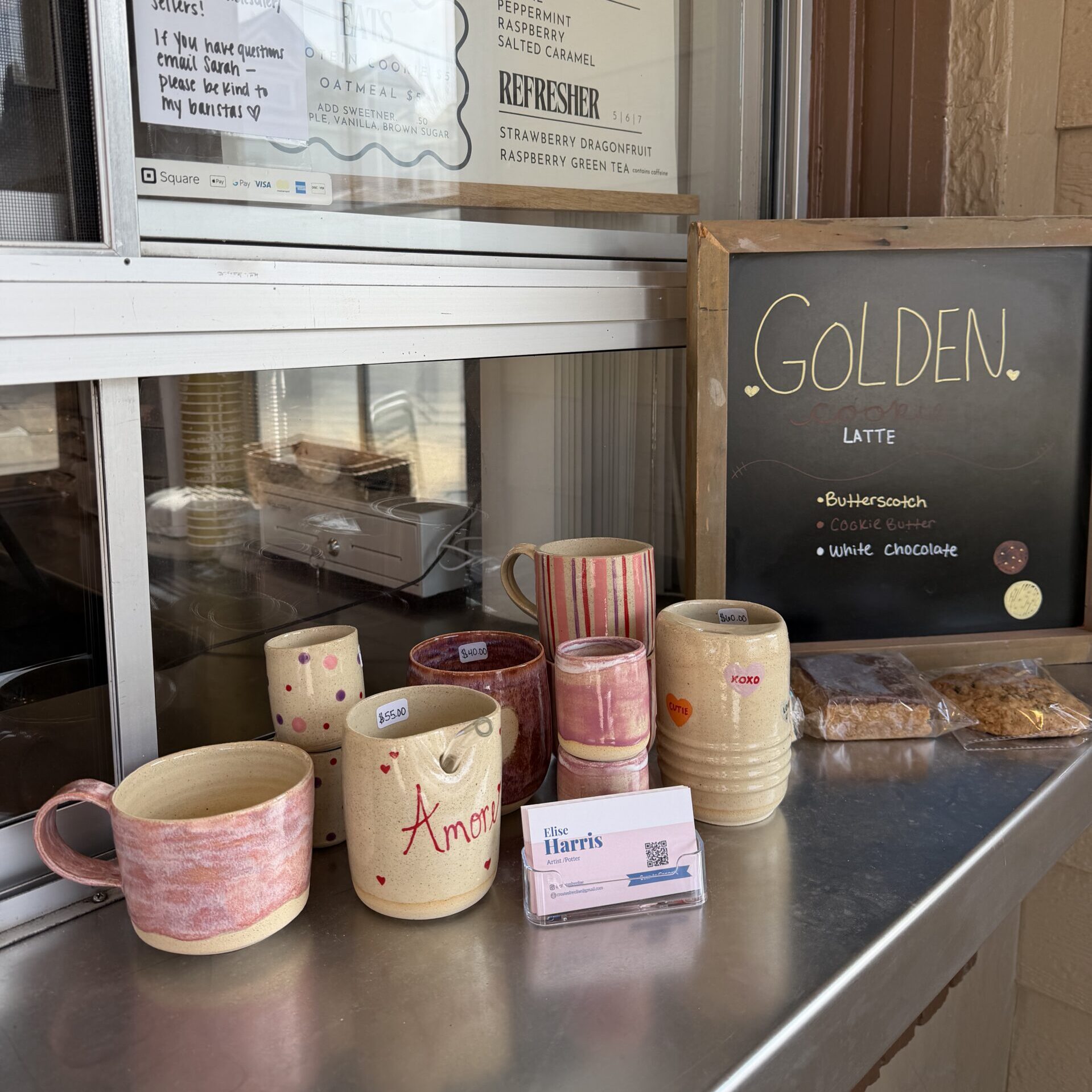
I’m also excited to begin sharing my cups beyond my studio by working with local coffee shops. Seeing handmade cups used in places where people gather, relax, and enjoy their coffee is something really special to me. My hope is that these pieces can become part of someone’s daily routine and add a little creativity to those everyday moments.
Every handmade cup carries its own story—the time, effort, and lessons learned along the way. No two pieces are exactly the same, and that’s part of what makes handmade ceramics so special.
If you are interested in placing an order or learning more about my work, please use the contact form below to get in touch.
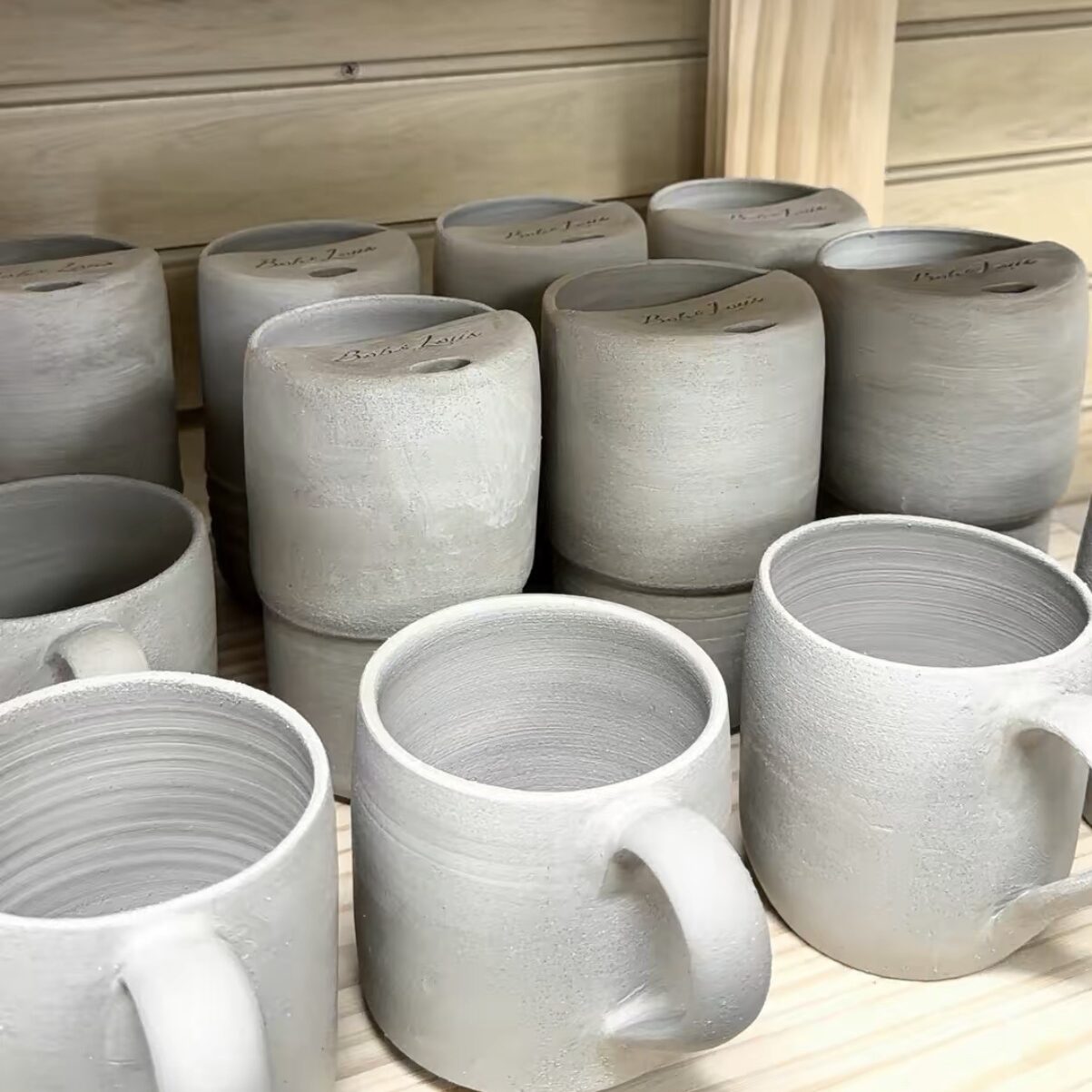
Unfinished handmade mugs drying in a pottery studio in Galena, Illinois. Photo by Elise Harris
Growing interest in handmade pottery brings shoppersto galena markets
Local Markets Help Handmade Pottery Thrive in Galena
By Elise Harris
In Galena, local markets are giving artists and potters a place to connect with customers, while shoppers are drawn to handmade art because these pieces are unique and buying them supports local makers.
Handmade pottery stands out because of the craftsmanship that goes into creating each piece, giving customers something different from what they might find in retail stores. Unlike mass-produced pottery, each piece reflects the time and craftsmanship the artist puts into making it. Local markets allow shoppers to meet the artist behind the work, creating a special and personal moment for the customers.
Ethan Carter, market organizer, said pottery offers customers something mass-produced products can’t.
“I like the fact that every piece would be hand-done and unique to its own special character, and plus the fact that I’m supporting someone local maybe, or someone that spends the extra time and effort into making a piece unique to itself,” Carter says.
According to the American Craft Council, handmade goods are currently trending in popularity because consumers value the artists and their craft. The organization also states that supporting and buying helps preserve traditional art and helps local creative communities.
Emma Collins, a shopper, says the personal interactions at local markets are one reason customers enjoy returning to them.
“People like to have a reason to go mill around, meet the artist, feel the product, put a name to it, right, and support the community,” Collins said.
Creating pottery requires several stages before the finished product reaches the customers. Artists throw clay on the pottery wheel before trimming and shaping each individual piece. Artists sign their pieces, and the pottery is left out to dry before glaze is applied. The pieces are then fired in a kiln.
Galena’s local artisan markets have grown into an essential piece of the community, giving independent artists a platform to display their work and drawing in both residents and visitors. Locally owned businesses, galleries, and handmade markets represent the city’s historic downtown and tourism industry, says Visit Galena.
Handmade markets give shoppers the opportunity to connect with the artists and get to know them while supporting their business. For many customers, buying handmade pottery is about more than just buying a piece of ceramic; it’s about investing in craftsmanship, supporting local artists, and bringing home something that is truly unique.
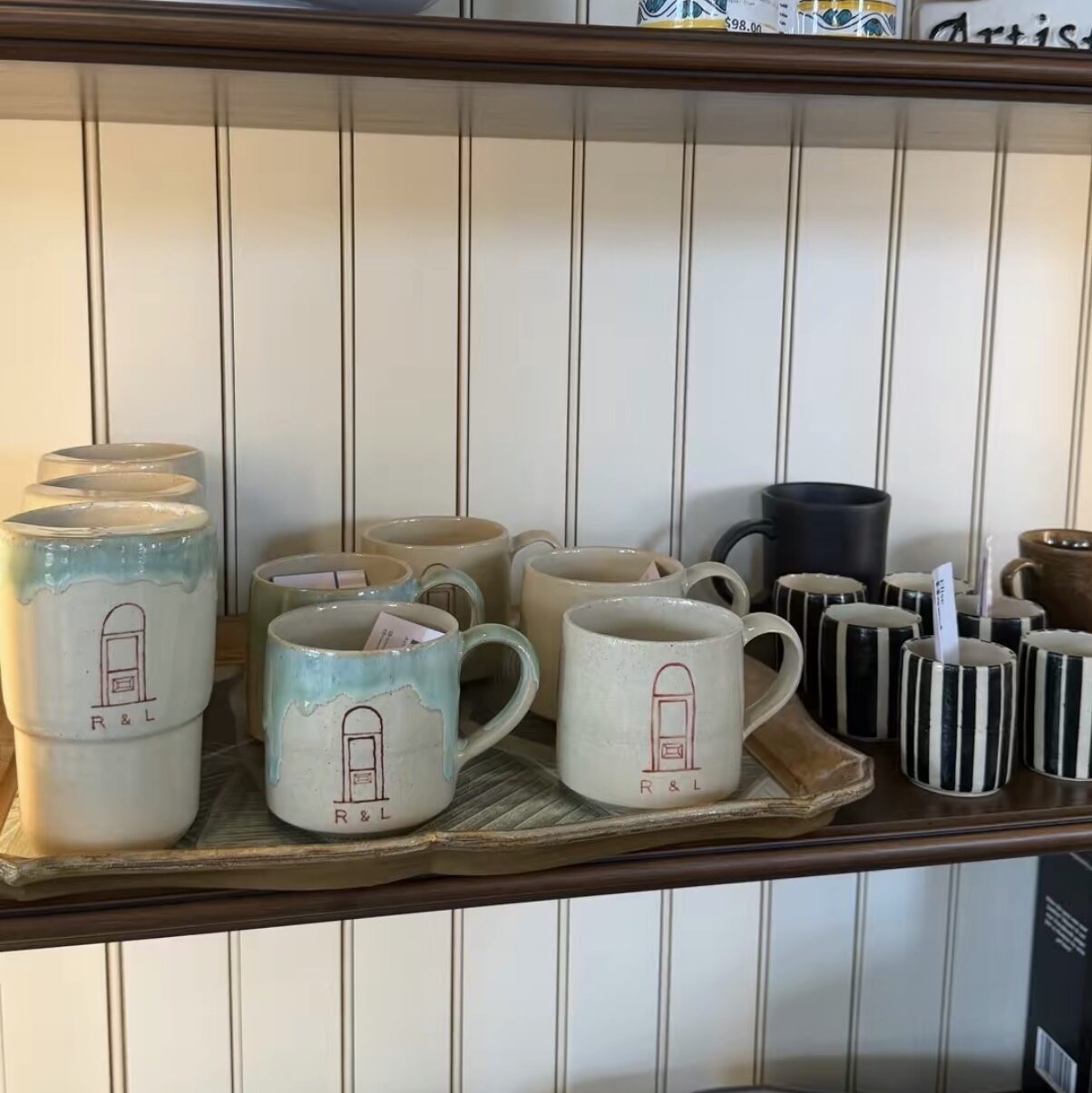
Finished handmade pottery is displayed for sale at a local shop in Galena, Illinois. Photo by Elise Harris